
Bill D. Aparicio-Huacarpuma · Marcelo L. Pereira Júnior · Alysson M. A. Silva · Alexandre C. Dias · Luiz A. Ribeiro Júnior


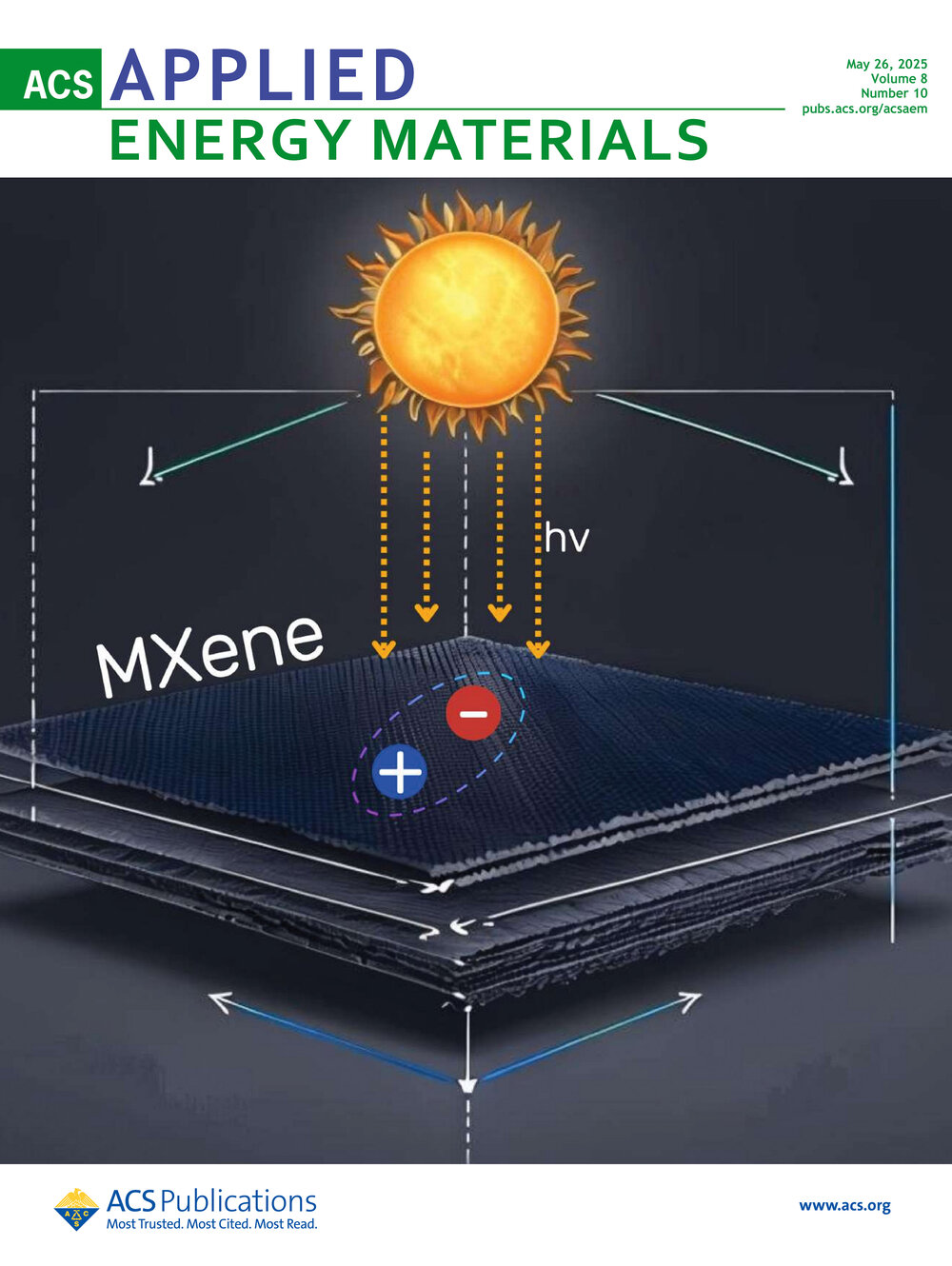
Two-dimensional (2D) Janus MXene monolayers have emerged as promising candidates for photovoltaic and optoelectronic applications due to their highly tunable physicochemical properties, which enable optimized light absorption and enhanced power conversion efficiency (PCE). In this study, we investigate the structural, electronic, excitonic, and optical properties of 2D Janus MXenes with the general formula M2CTT′ (M = Sc, Y; TT′ = FCl, FBr, ClBr) using density functional theory calculations combined with a semiempirical tightbinding approach. All six monolayers are found to be structurally stable, exhibiting a trigonal configuration with cohesive energies ranging from −5.74 eV/atom to −5.22 eV/atom. Their electronic band structures reveal an indirect semiconducting nature, with band gaps spanning 1.63 to 1.83 eV. The computed linear optical properties indicate strong absorption in the visible, infrared, and ultraviolet regions, reinforcing their potential for solar energy harvesting. Strong many-body effects are observed, with exciton binding energies between 249 and 373 meV, which are crucial for accurately describing energy conversion processes. The estimated PCE, evaluated using both the Shockley−Queisser (SQ) limit and the pectroscopy-limited maximum efficiency (SLME) approach, ranges from 25.5% to 32.6%, positioning these Janus M2CTT′ MXenes as strong contenders for next-generation photovoltaic devices.
ACS APPLIED ENERGY MATERIALS, 2025 · Fator de impacto 5,5.
DOI 10.1021/acsaem.5c00657