
Luiz A. Ribeiro Júnior · Marcelo L. Pereira Júnior · Alexandre F. Fonseca


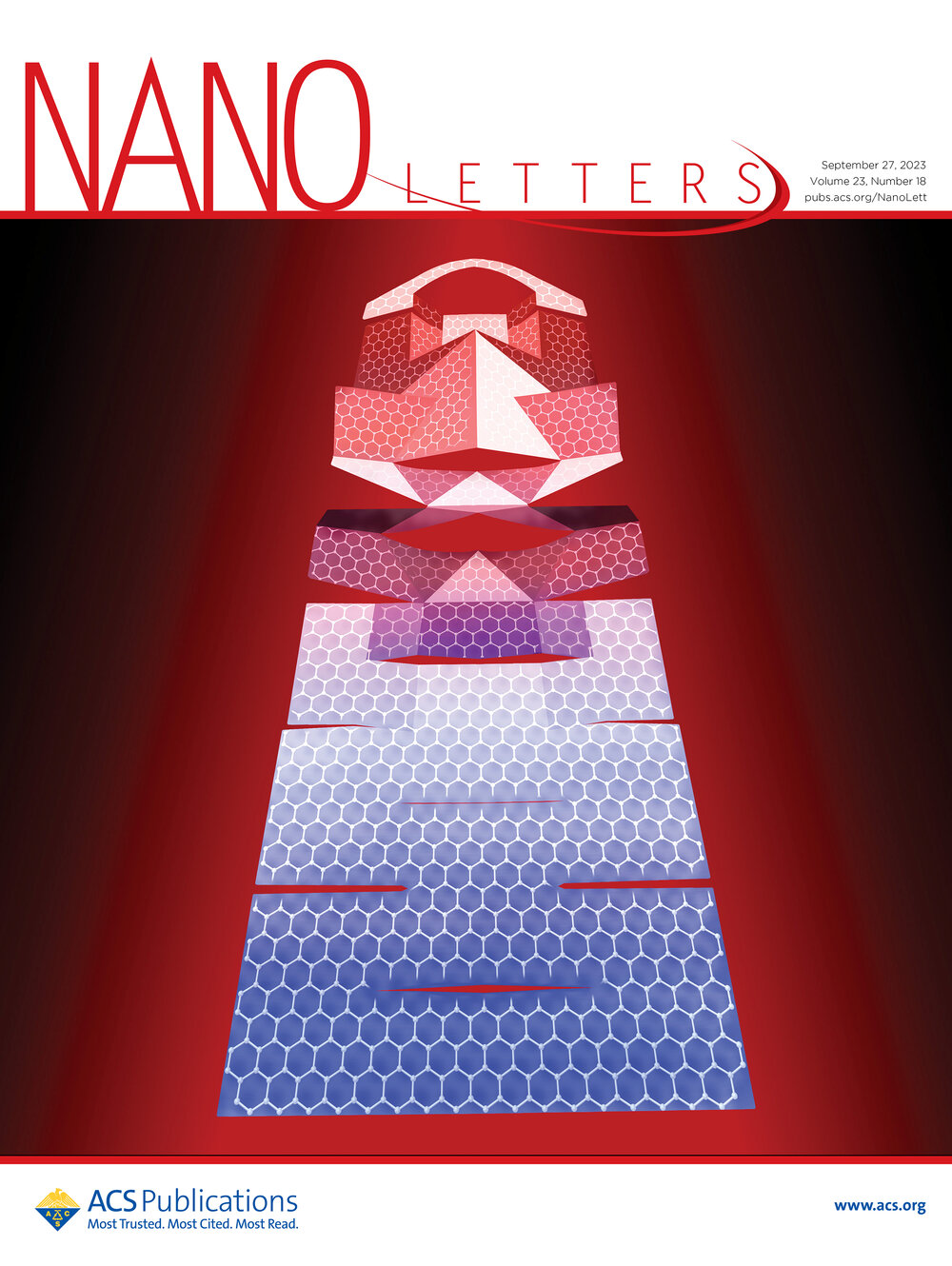
Kirigami, a traditional Japanese art of paper cutting, has recently been explored for its elastocaloric effect (ECE) in kirigami-based materials (KMs), where an applied strain induces temperature changes. Importantly, the feasibility of a nanoscale graphene kirigami monolayer was experimentally demonstrated. Here, we investigate the ECE in GK representing the thinnest possible KM to better understand this phenomenon. Through molecular dynamics simulations, we analyze the temperature change and coefficient of performance (COP) of GK. Our findings reveal that while GKs lack the intricate temperature changes observed in macroscopic KMs, they exhibit a substantial temperature change of approximately 9.32 K (23 times higher than that of macroscopic KMs, which is about 0.4 K) for heating and −3.50 K for cooling. Furthermore, they demonstrate reasonable COP values of approximately 1.57 and 0.62, respectively. It is noteworthy that the one-atom-thick graphene configuration prevents the occurrence of the complex temperature distribution observed in macroscopic KMs.
NANO LETTERS, 2023 · Fator de impacto 9,1.
DOI 10.1021/acs.nanolett.3c02260